Sustainability & Biodiversity
Creating Sustainable Olive Groves
Reversing desertification and bringing biodiversity back to barren land.
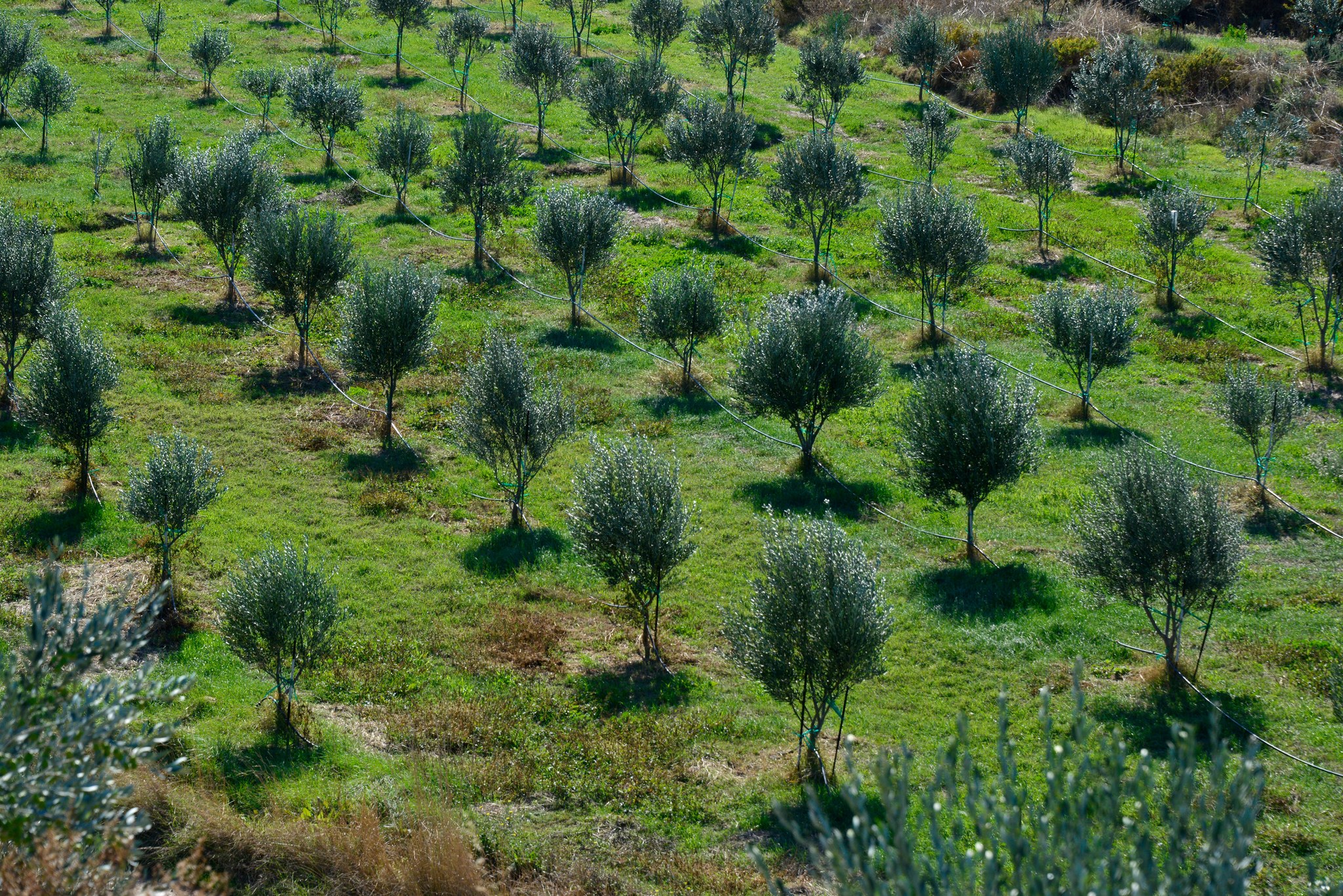
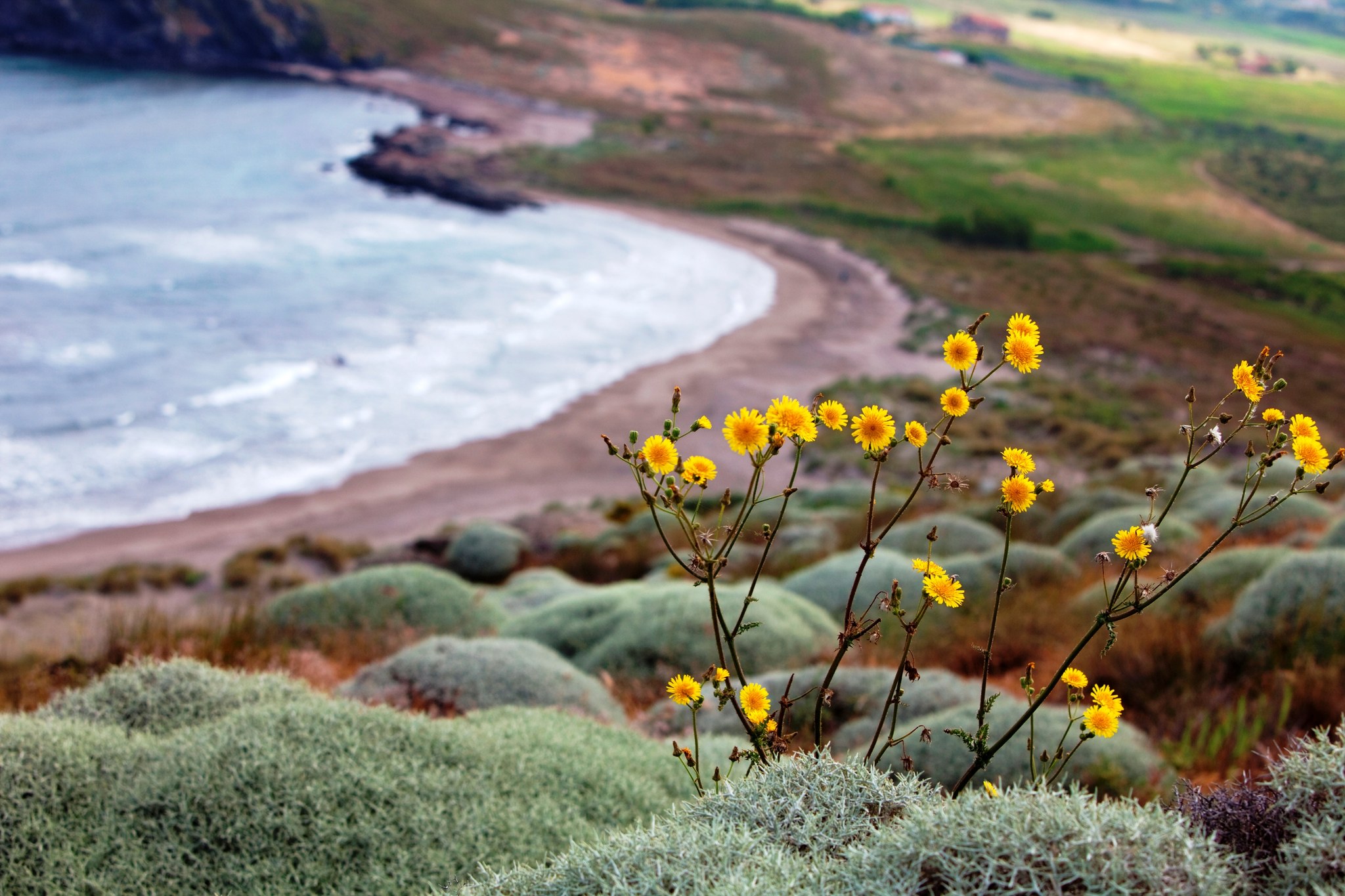
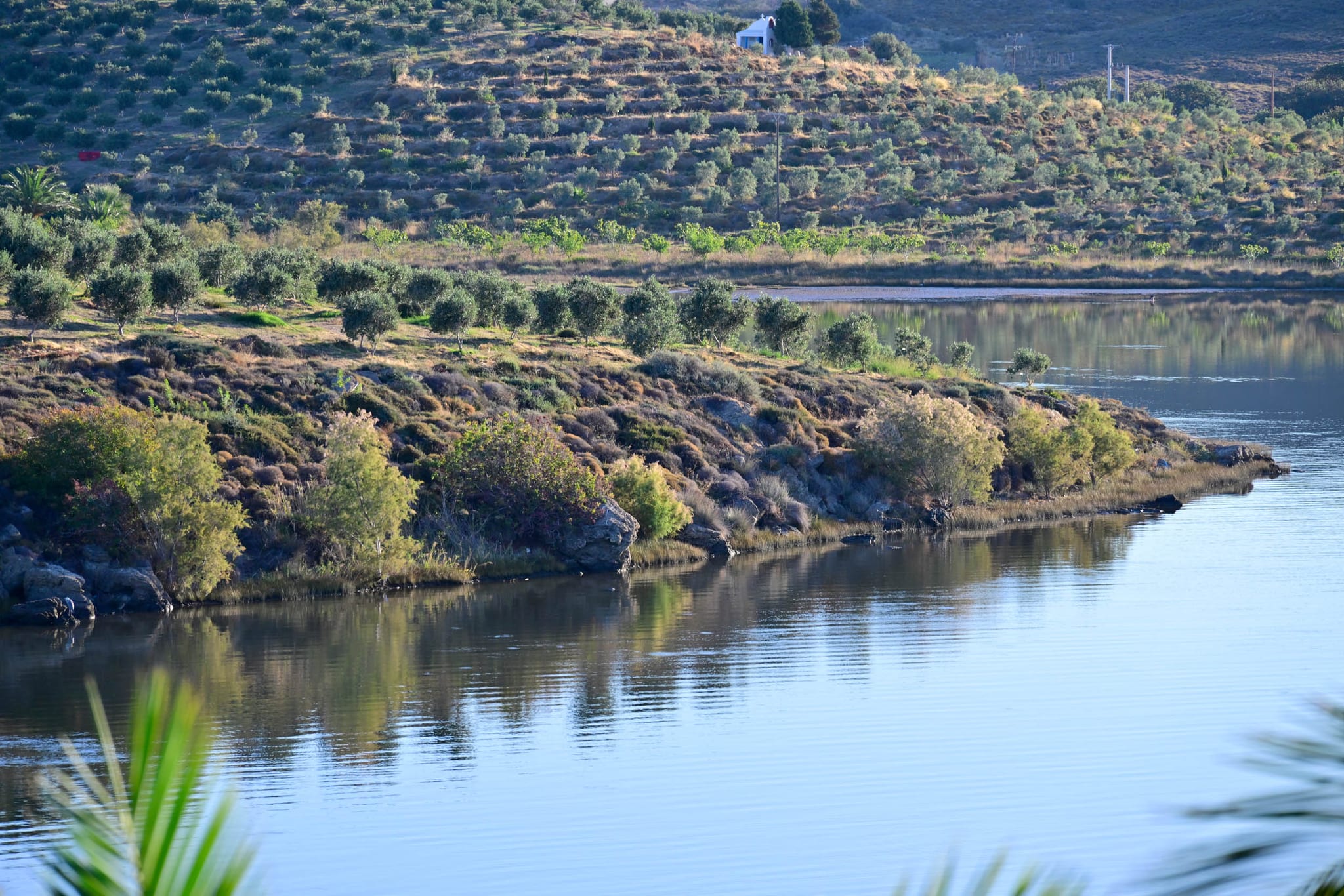
For 24 years we have been bringing the degraded, desertified land around Sigri back to life: we built terraces, fed the soil with our own compost and planted other trees among the olives. And life returned.
Where we began
We set out to prove that, if we really want to, even degraded and desertified land like this can be regenerated, and turned into a paradise that gives back to the environment, the climate and biodiversity.


The journey of regeneration
Nature is an endless teacher, and we are its students.”
Antonis Tirpintiris, CEO of Falcon S.A.
Its wisdom is unlimited, but its time scale is far beyond our own. So everything we have done across the estate comes down to one sentence: we imitated nature, but gave it a human speed.
01
Creating terraces
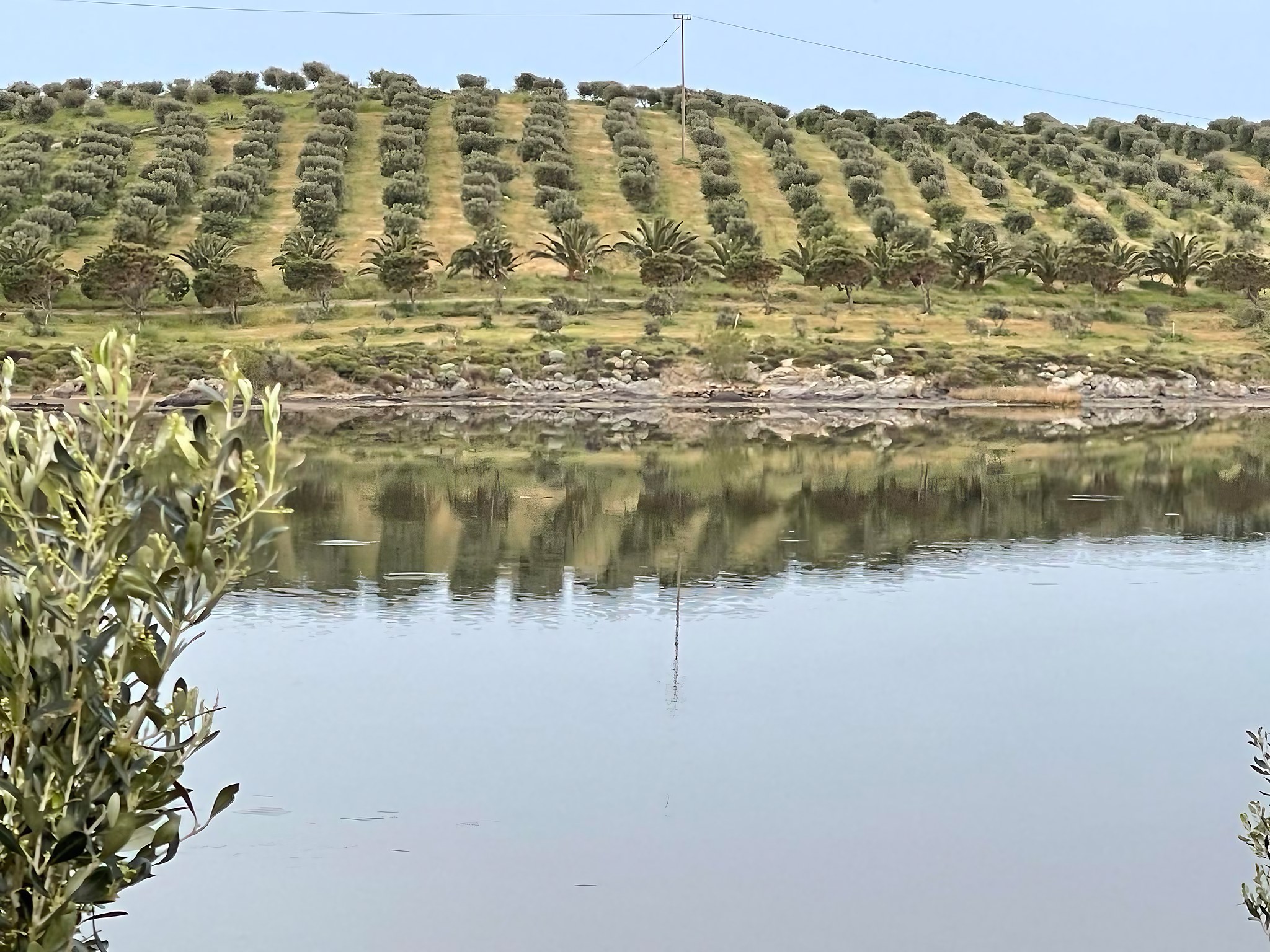
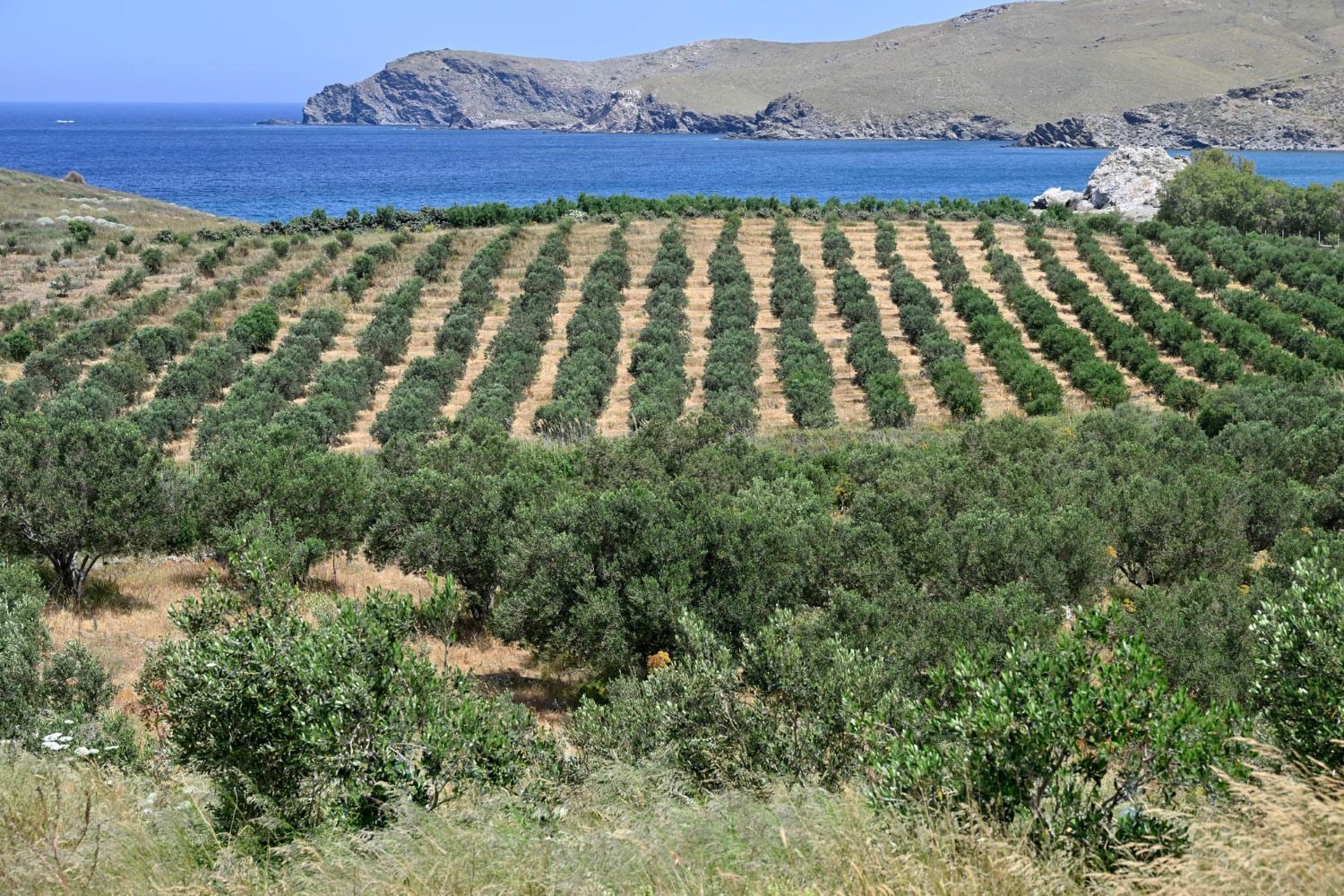
We did not invent anything. We simply copied our grandparents, and their grandparents before them. For thousands of years, terraces built by hand in the rocky soils of the Mediterranean have answered the same problems: better aeration, a better spread of water and temperature, more of the sun’s energy reaching the roots, and room for the local flora to grow freely on the slopes.
We worked with the landscape, not against it. We used machinery, because we did not have the time our grandparents had, and each terrace became a strip of life.


02
Compost‑based nutrition
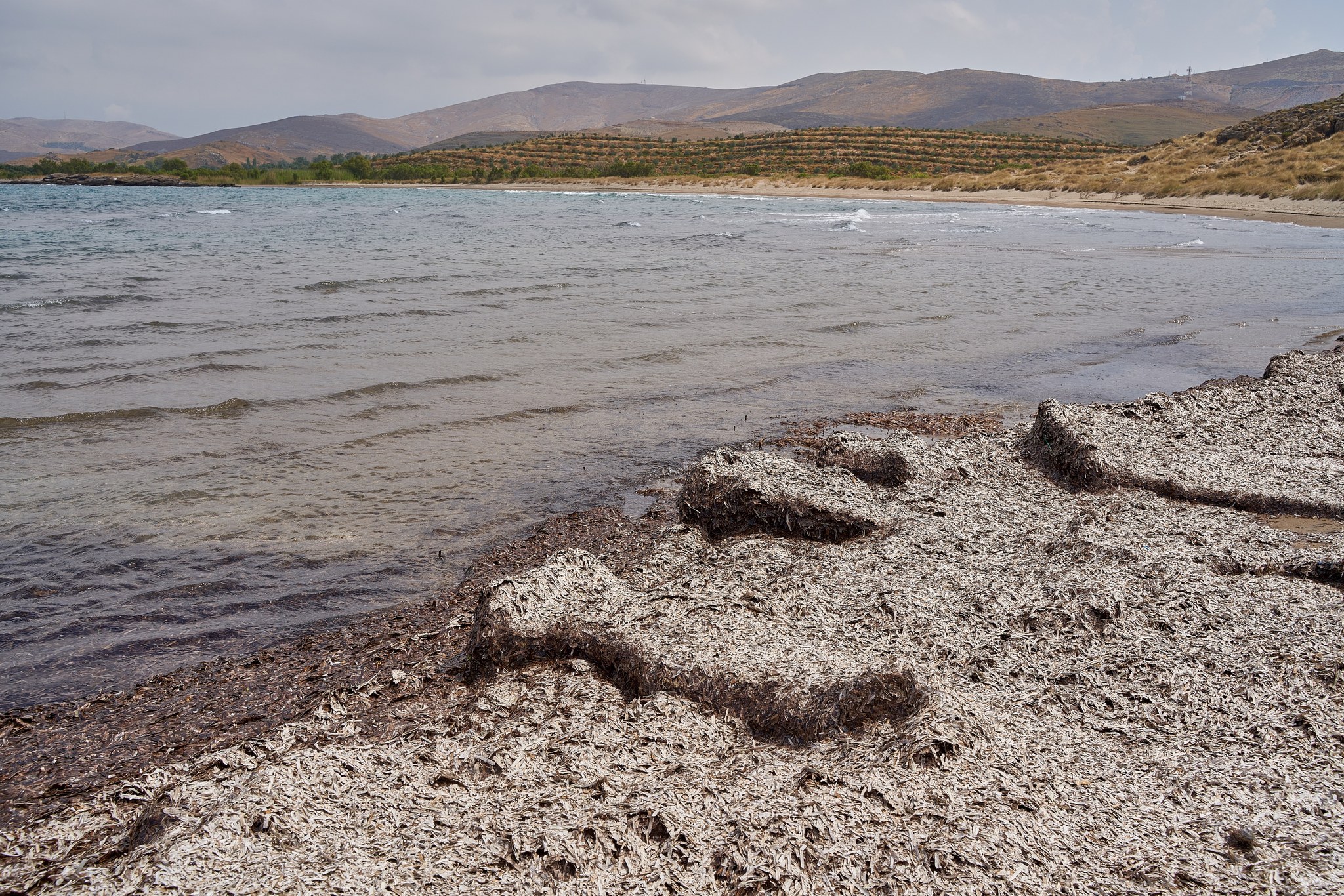
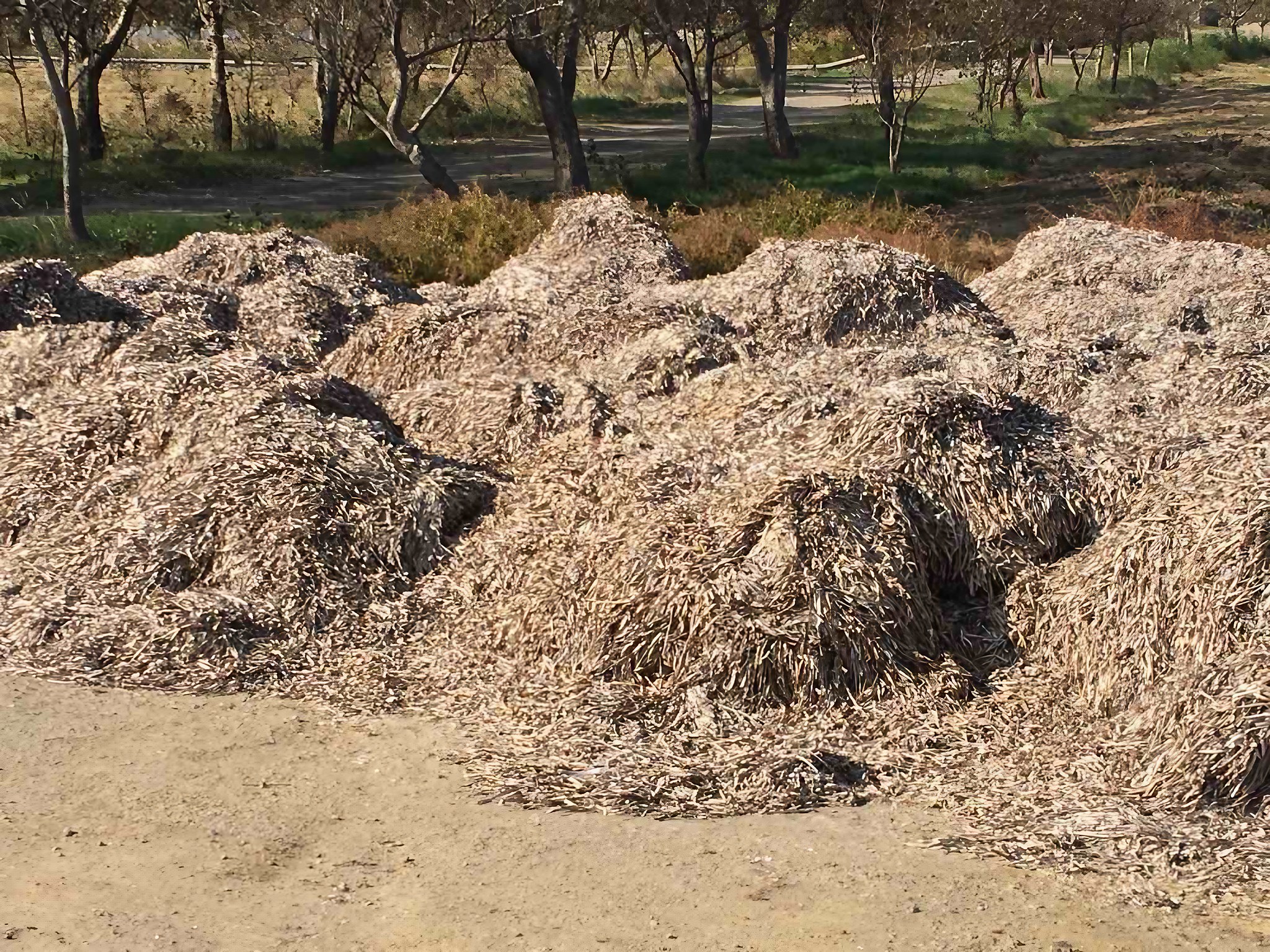
Here again, we learned from nature. We have produced thousands of cubic metres of compost from the seaweed the sea washes ashore, manure, branches, leaves and the by-products of our own olive mill.
It is not a recipe; it is fermentation. What nature does in a forest over decades, we accelerate: we pile it, aerate it and let it mature. When it returns to the soil, it does not simply fertilize it; it brings the soil back to life.
What goes into our compost
- Posidonia oceanica
- Manure
- Shredded branches and leaves
- Olive mill by-products


03
Reversing desertification by planting
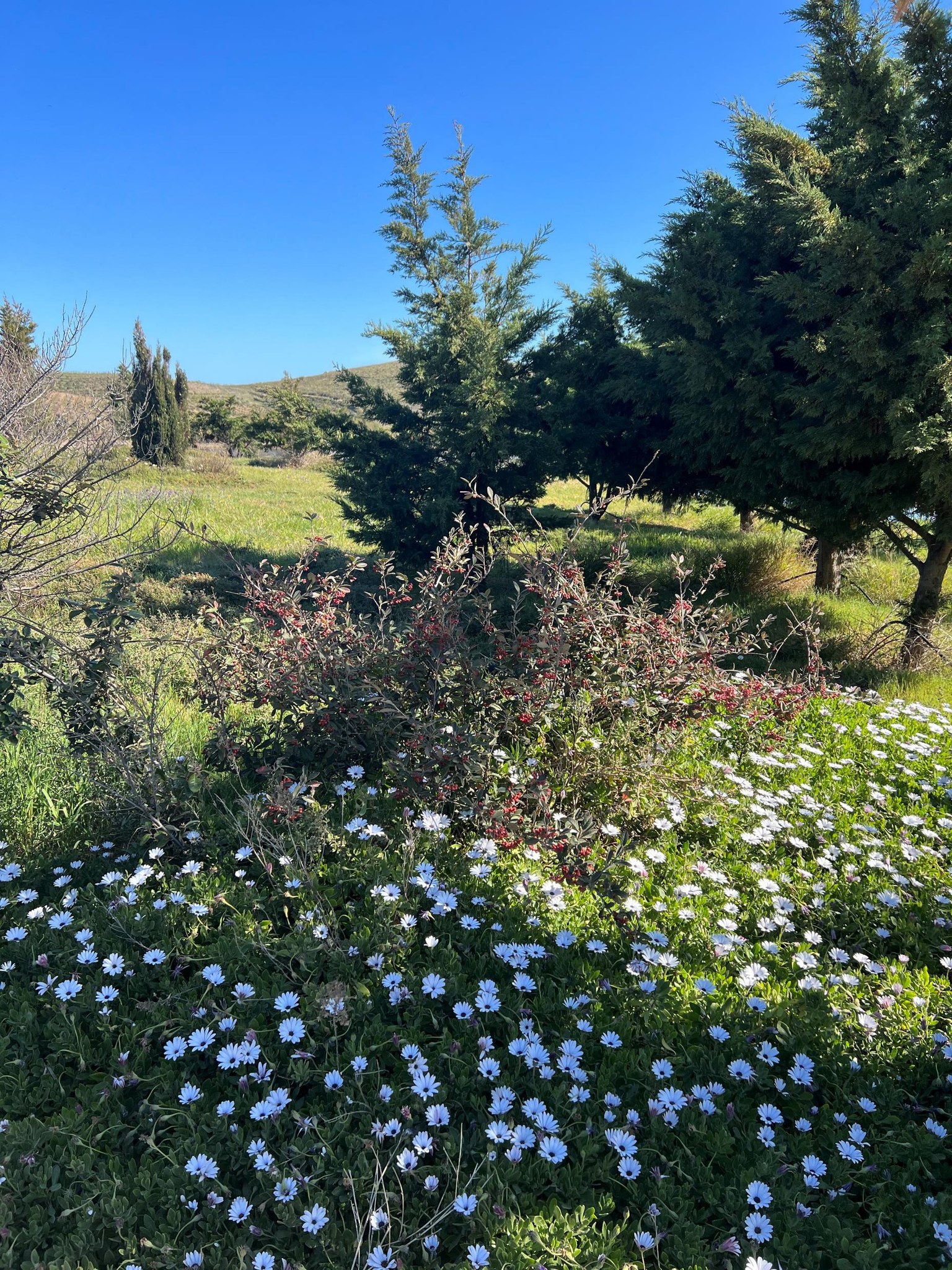
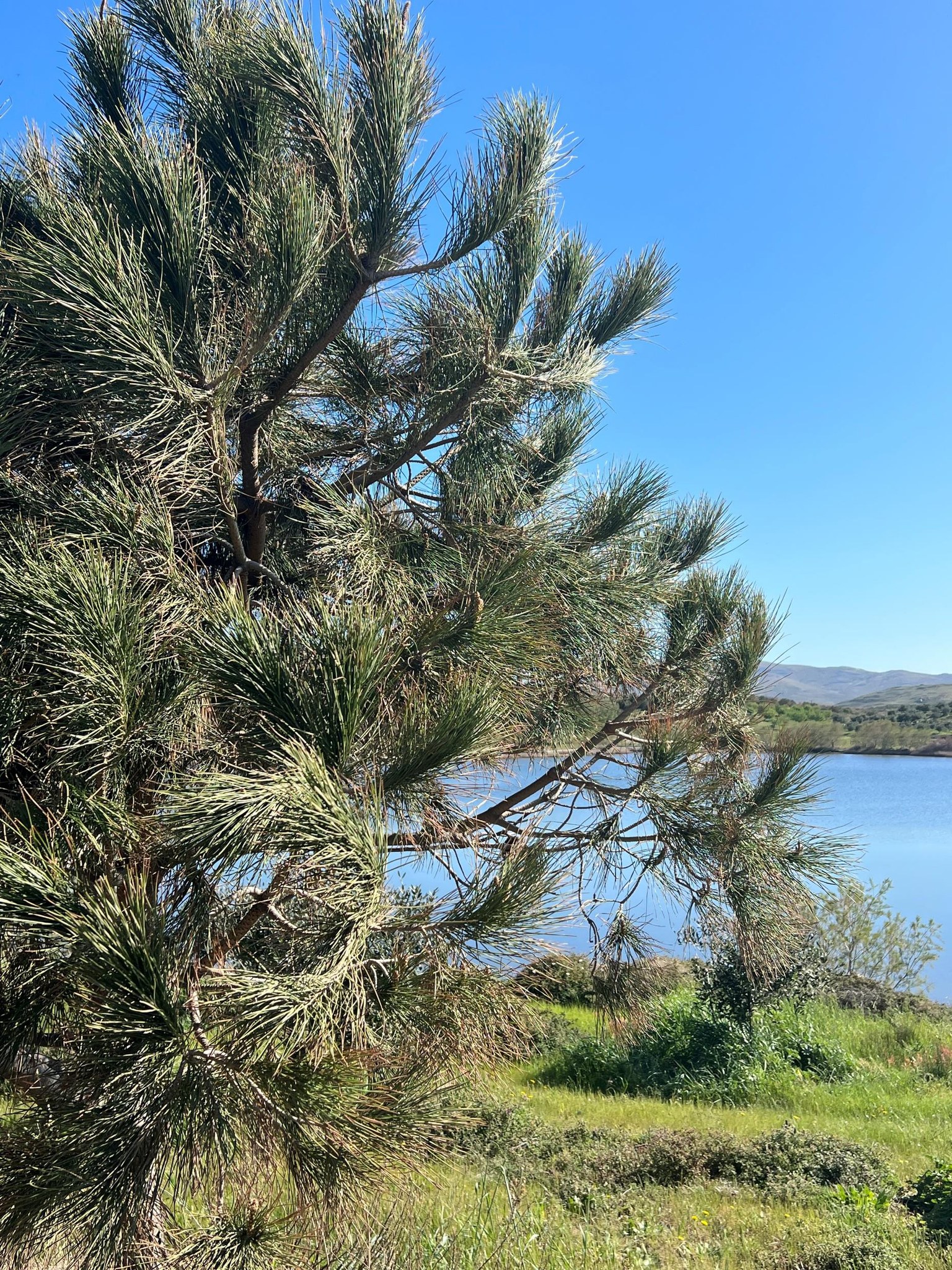
In nature, there is no monoculture. In a natural Mediterranean ecosystem, the olive tree lives together with pomegranate, fig, almond and pine trees and palms, and beneath them all grows a layer of grasses and other plants.
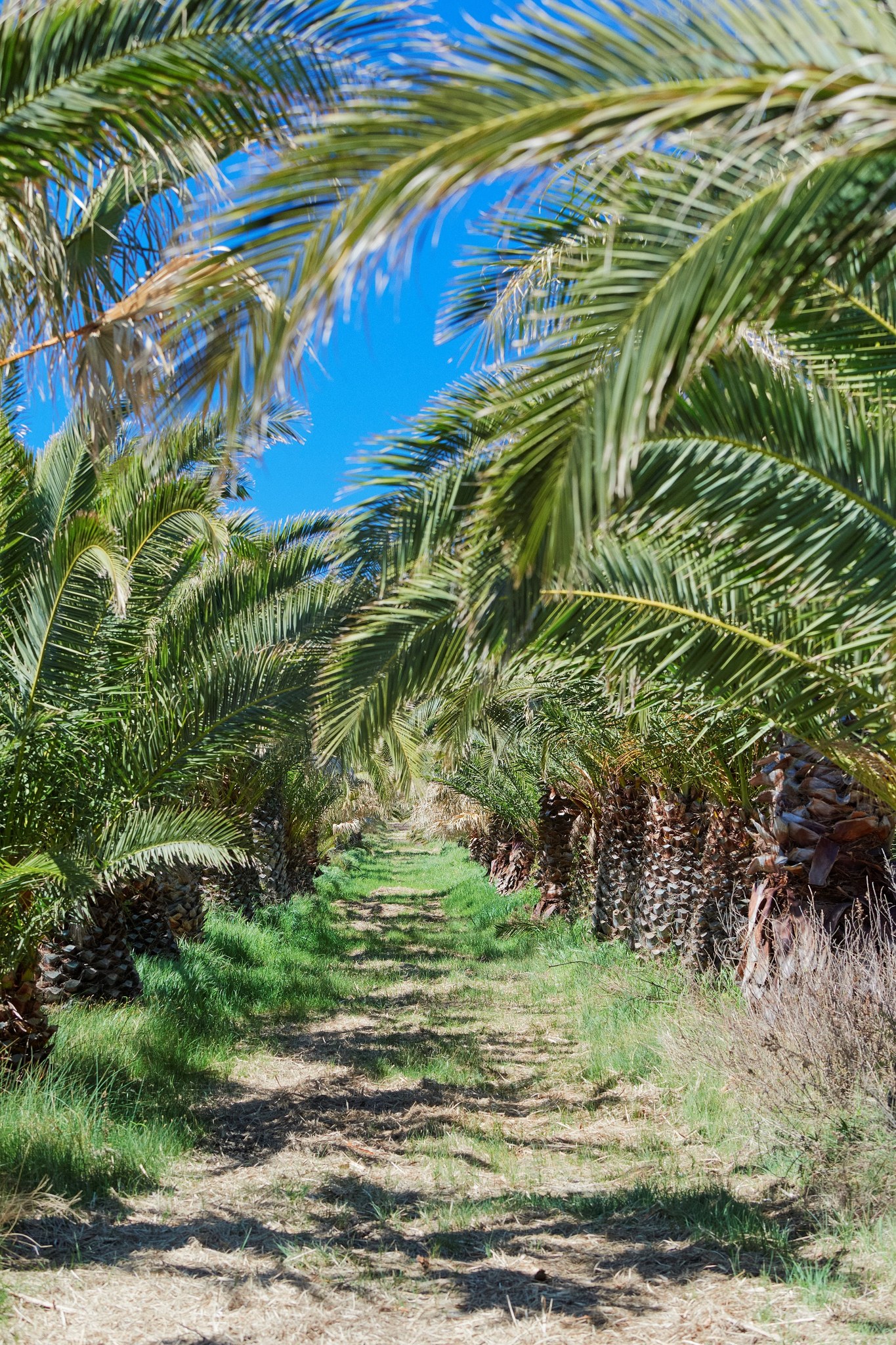
So we planted apple, almond, plum and fig trees, pomegranates, eucalyptus, cypresses, palms and many others. This is not simply a collection of different species; it is a partnership. Each species gives something to the one next to it. We simply stopped separating them.
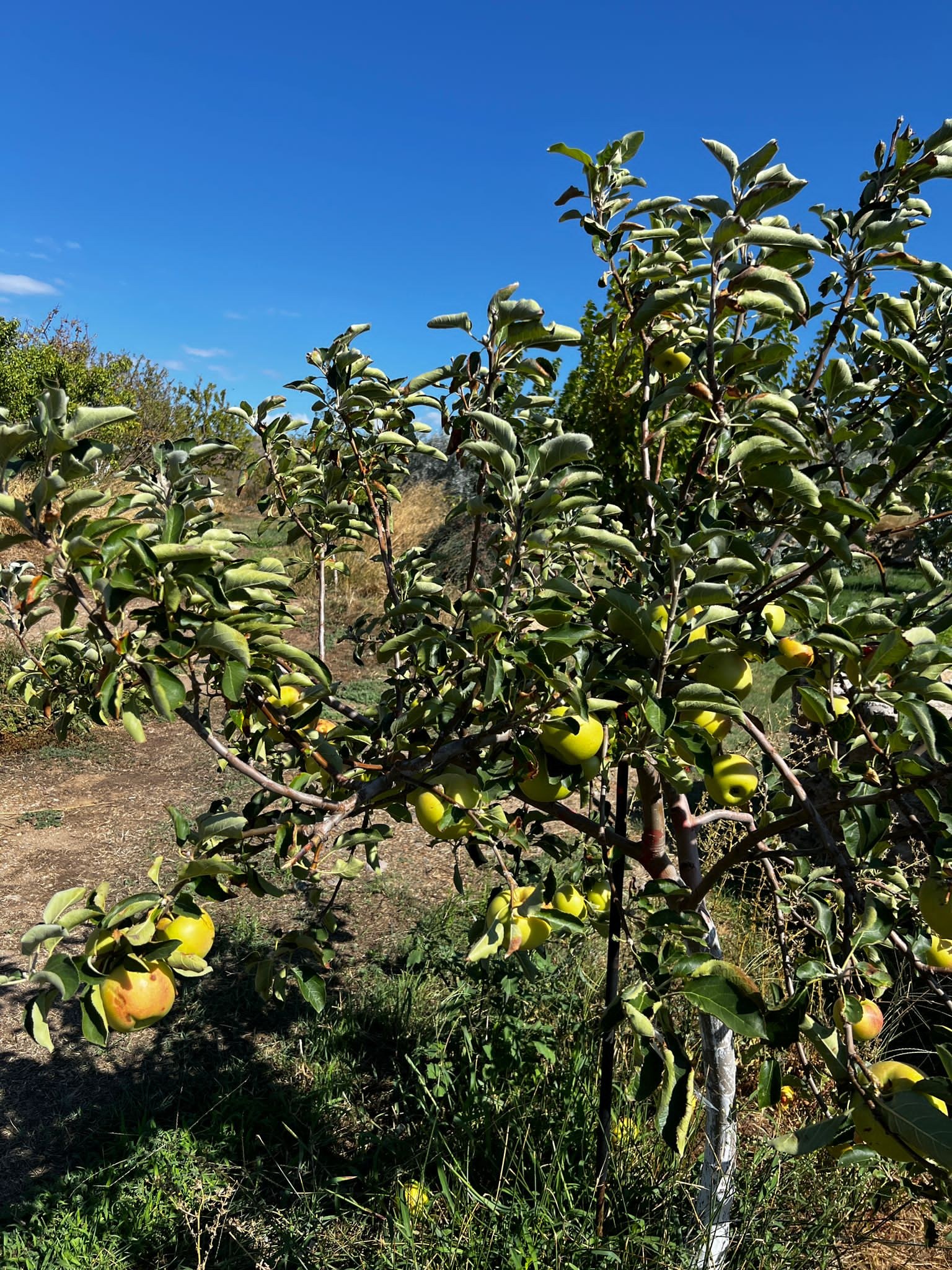
Apple treesA young apple tree hung with yellow apples 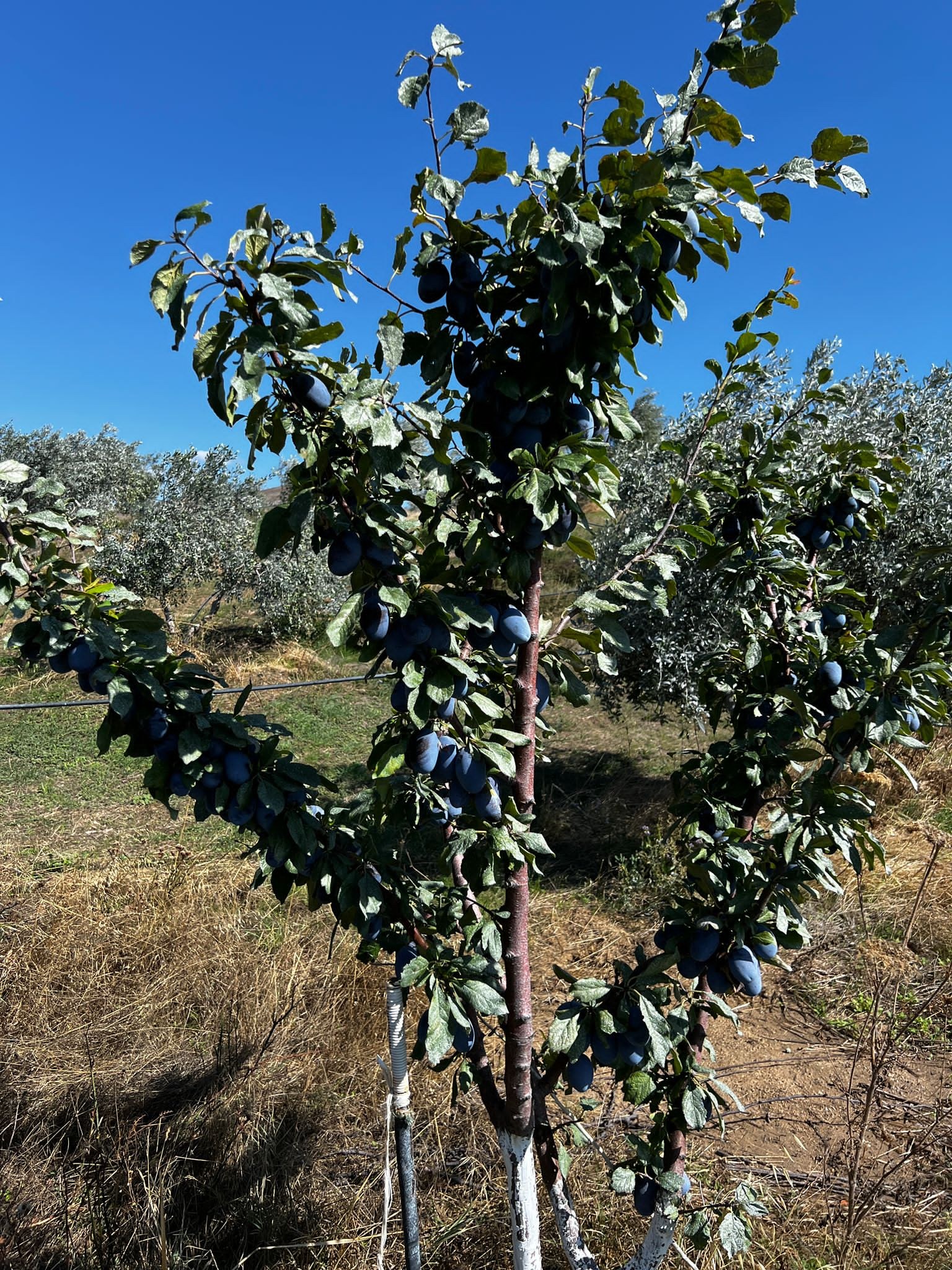
Plum treesA plum tree with dark ripe plums 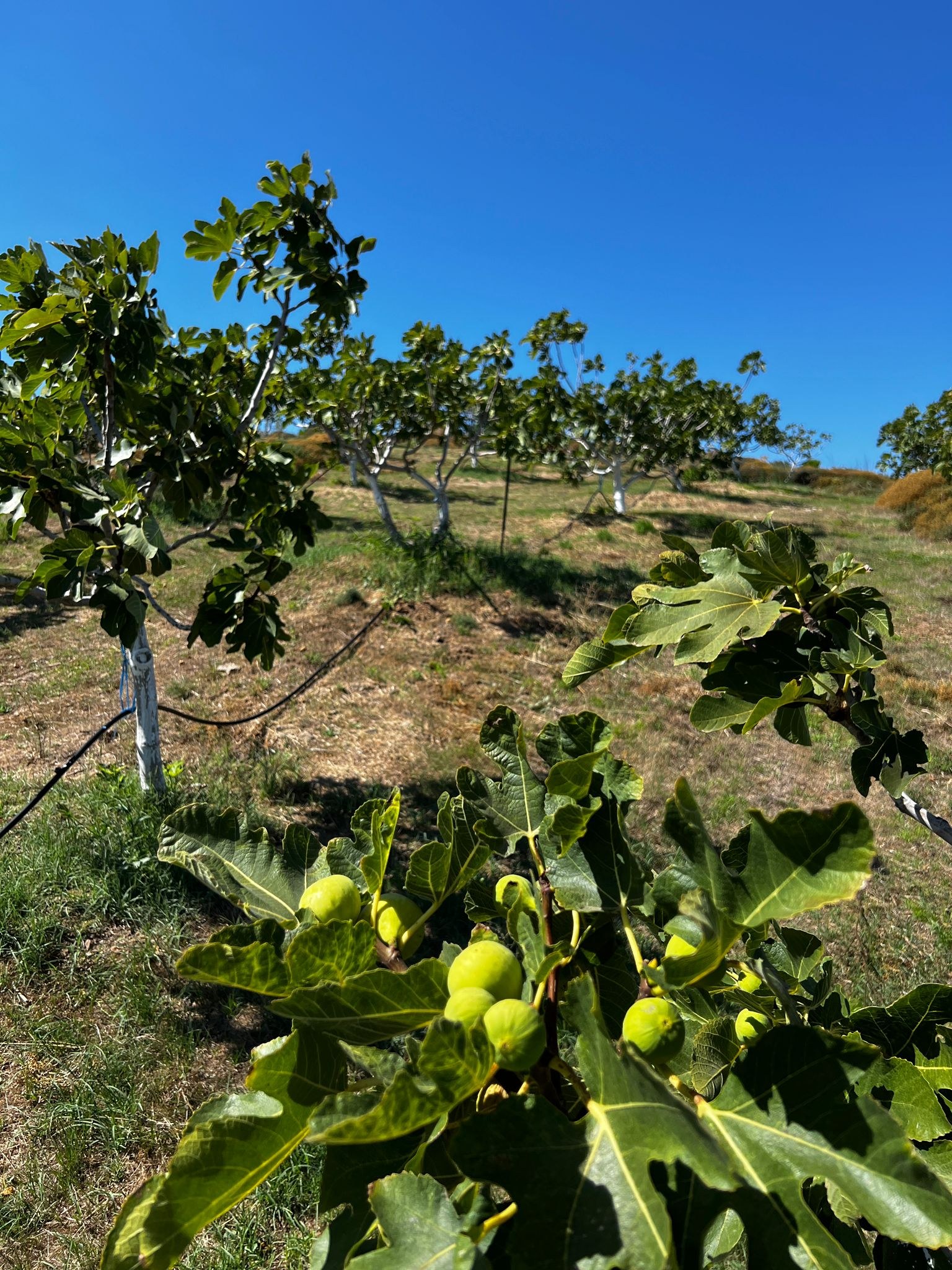
Fig treesYoung figs on a fig tree, with more fig trees behind 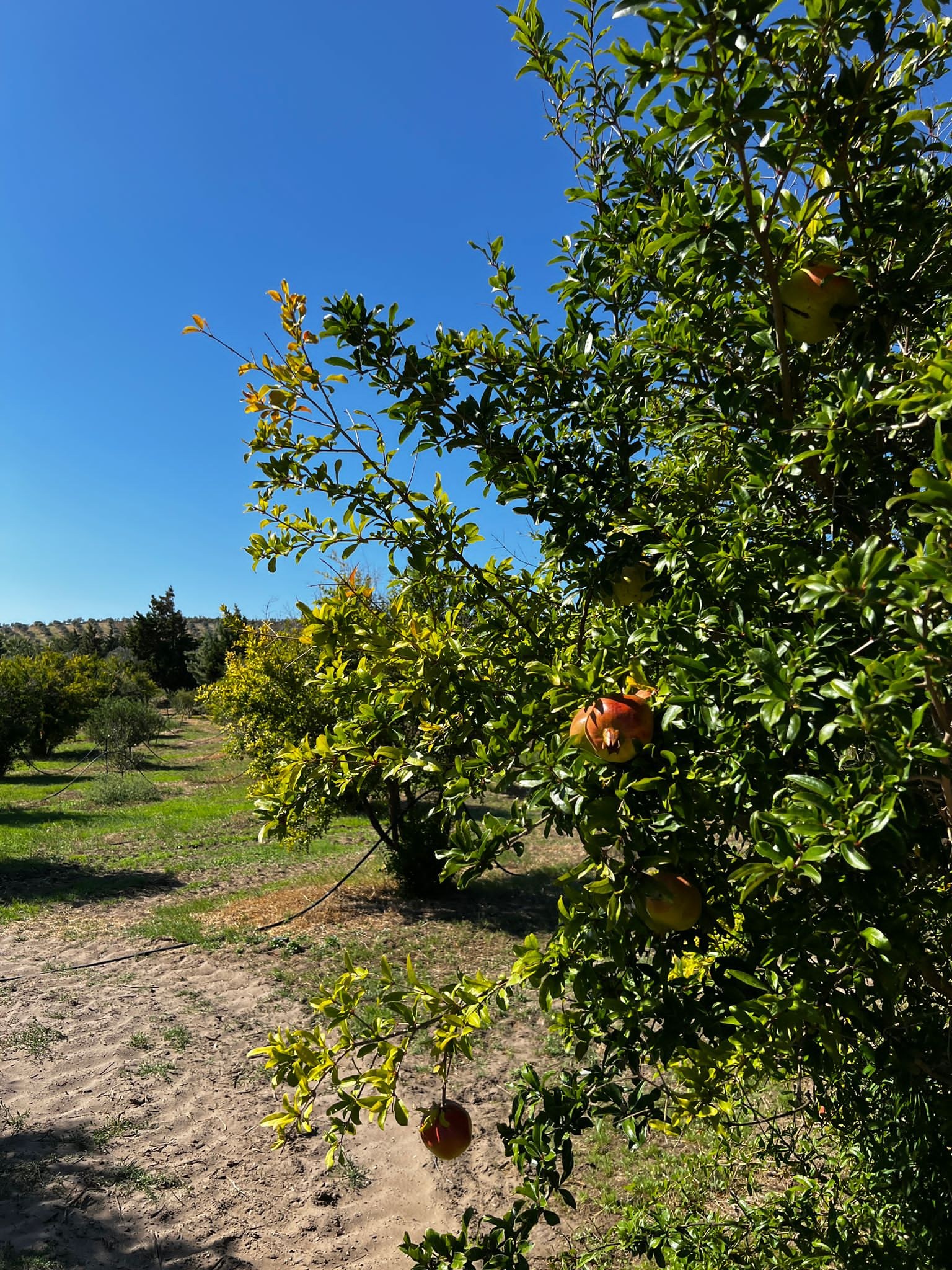
Pomegranate treesA pomegranate tree hung with fruit beside a track 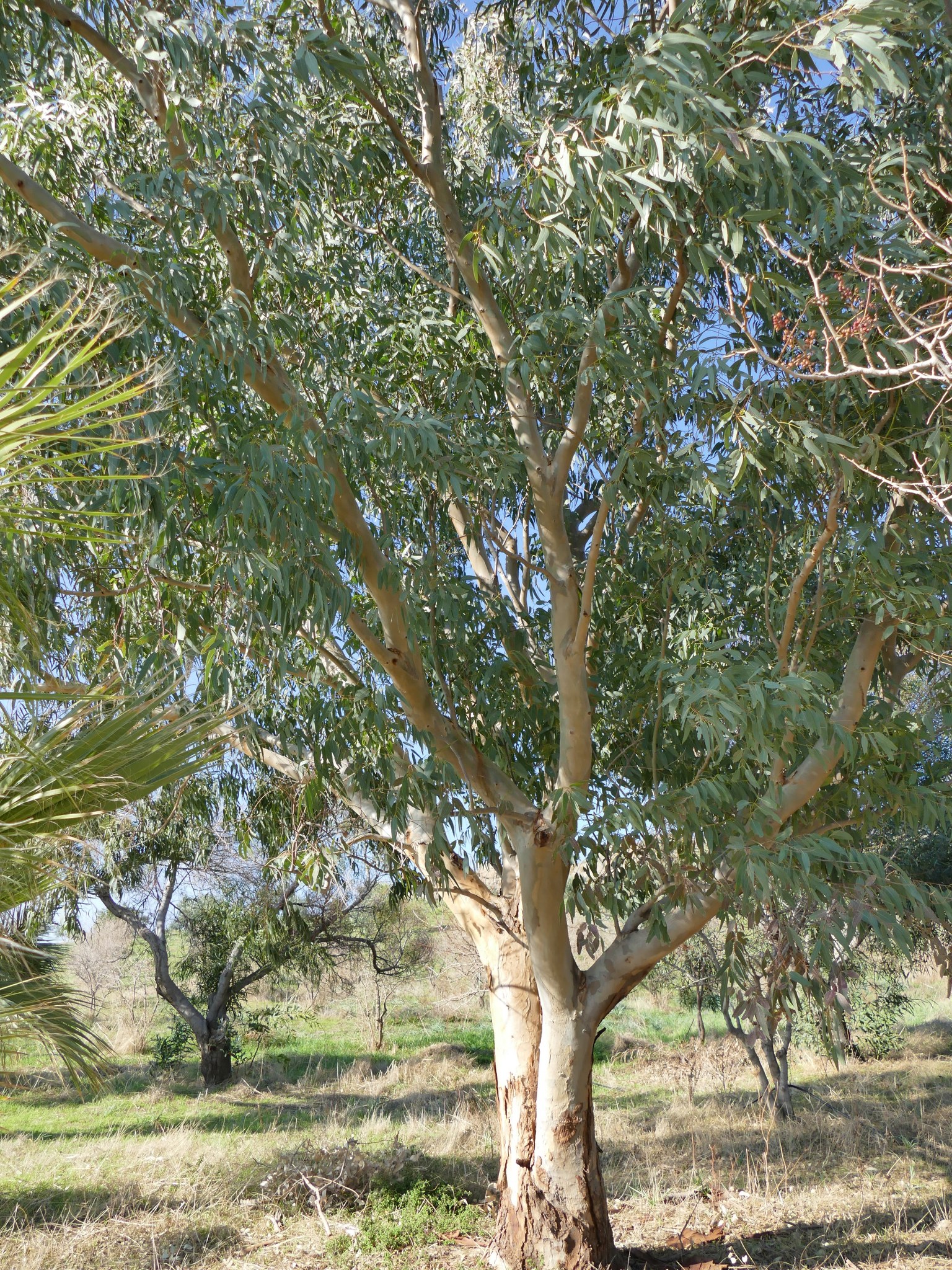
EucalyptusA eucalyptus with a pale trunk in a grassy grove 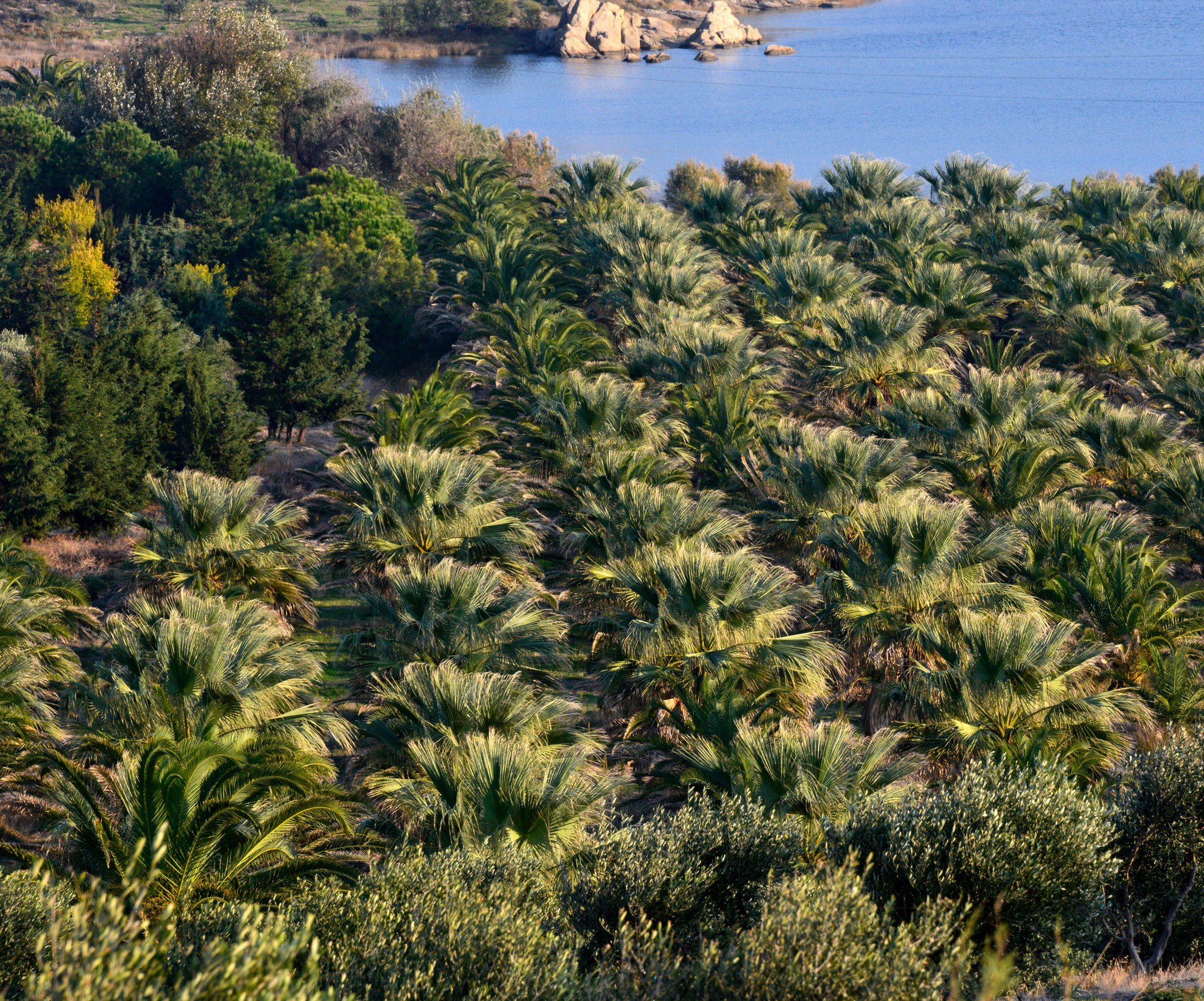
PalmsA grove of palms on the slope above the sea

04
Micro-ecosystems on the terraces
And then came the reward: we moved from a dead landscape to a living one.
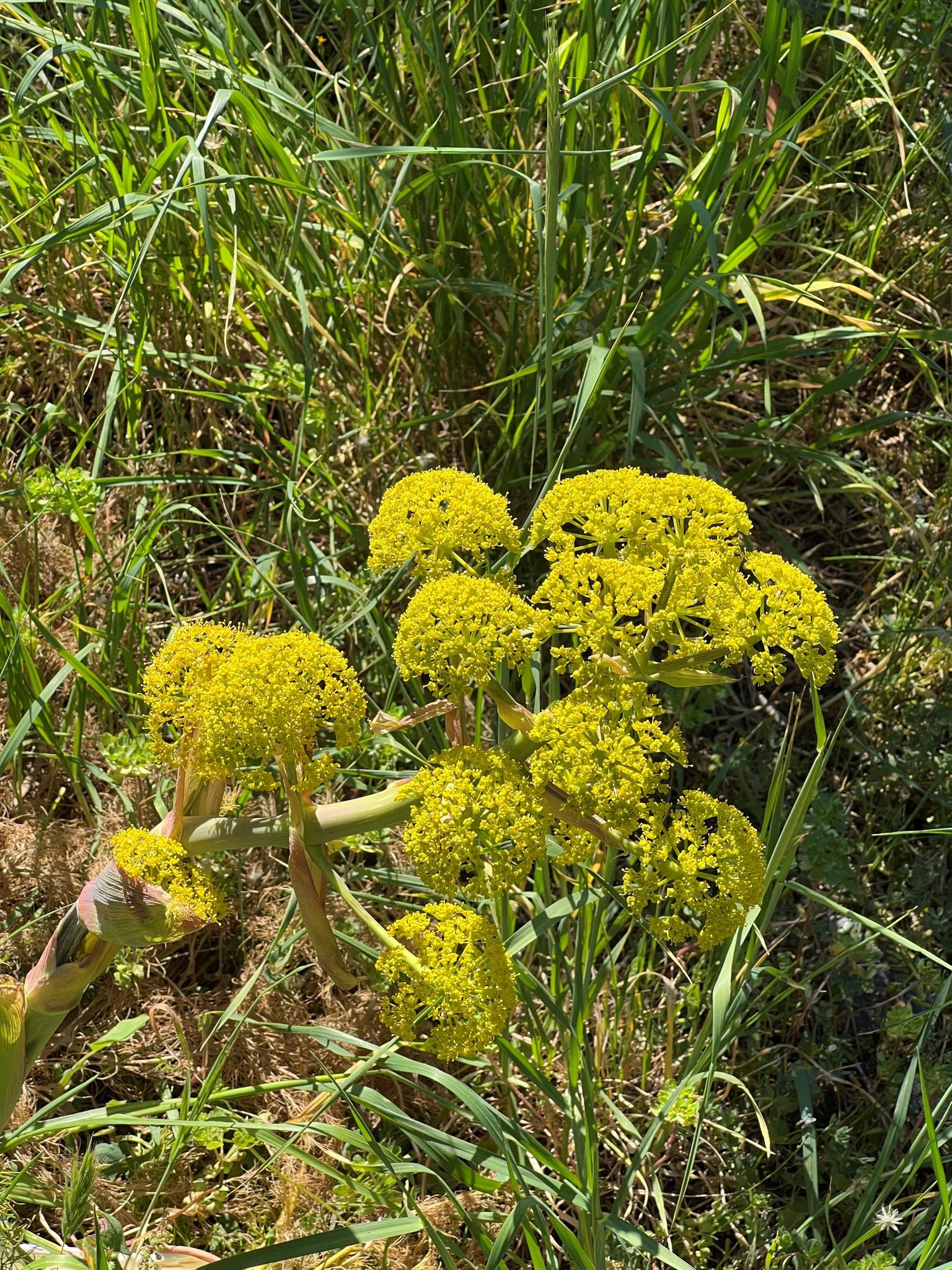
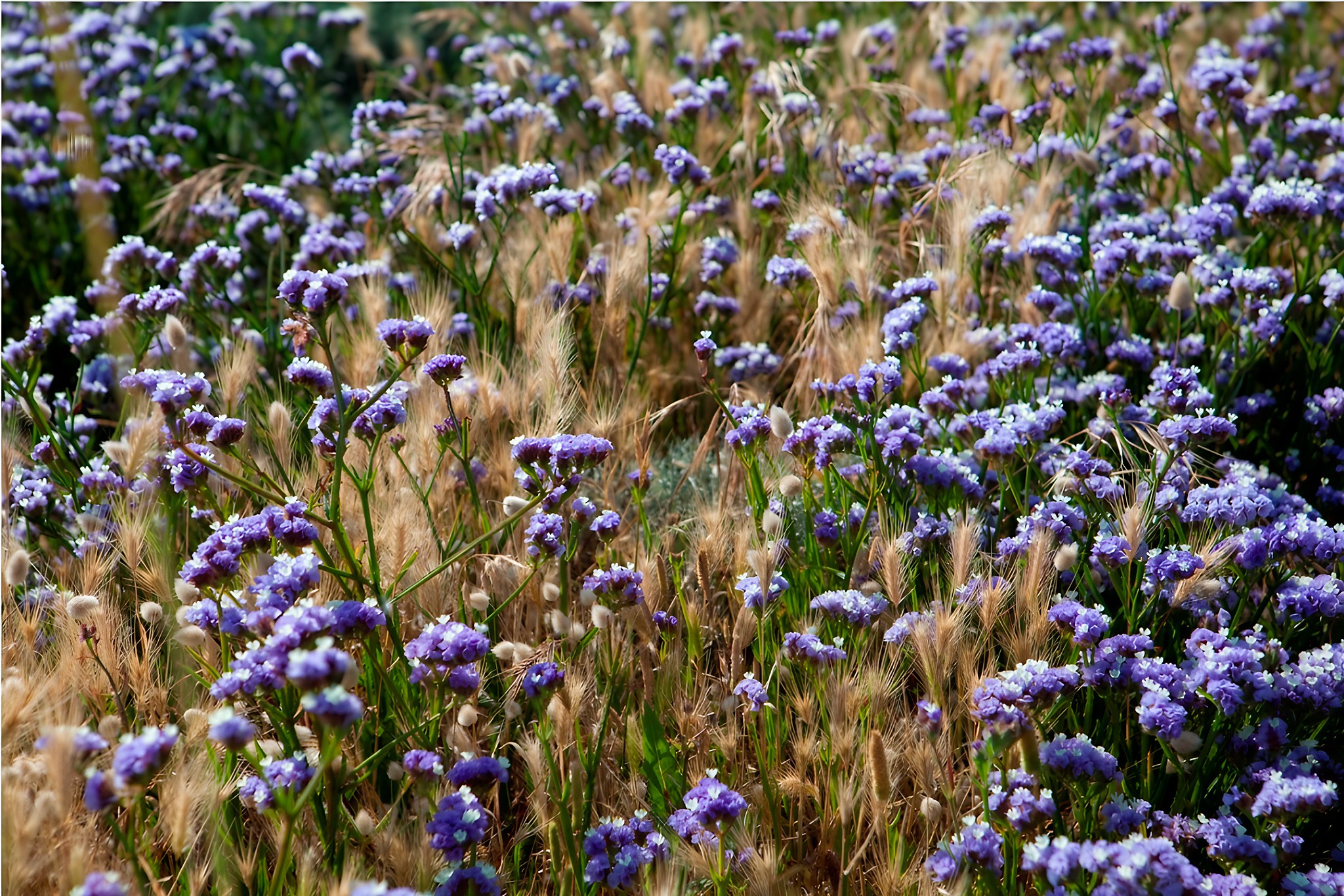
On the terraces, small ecosystems began to flourish, with wild grasses, aromatic plants and many others: poppies, orchids, chamomile, thyme, oregano, wild lavender, cistus and many more.

PoppiesRed poppies among the olive trees in spring 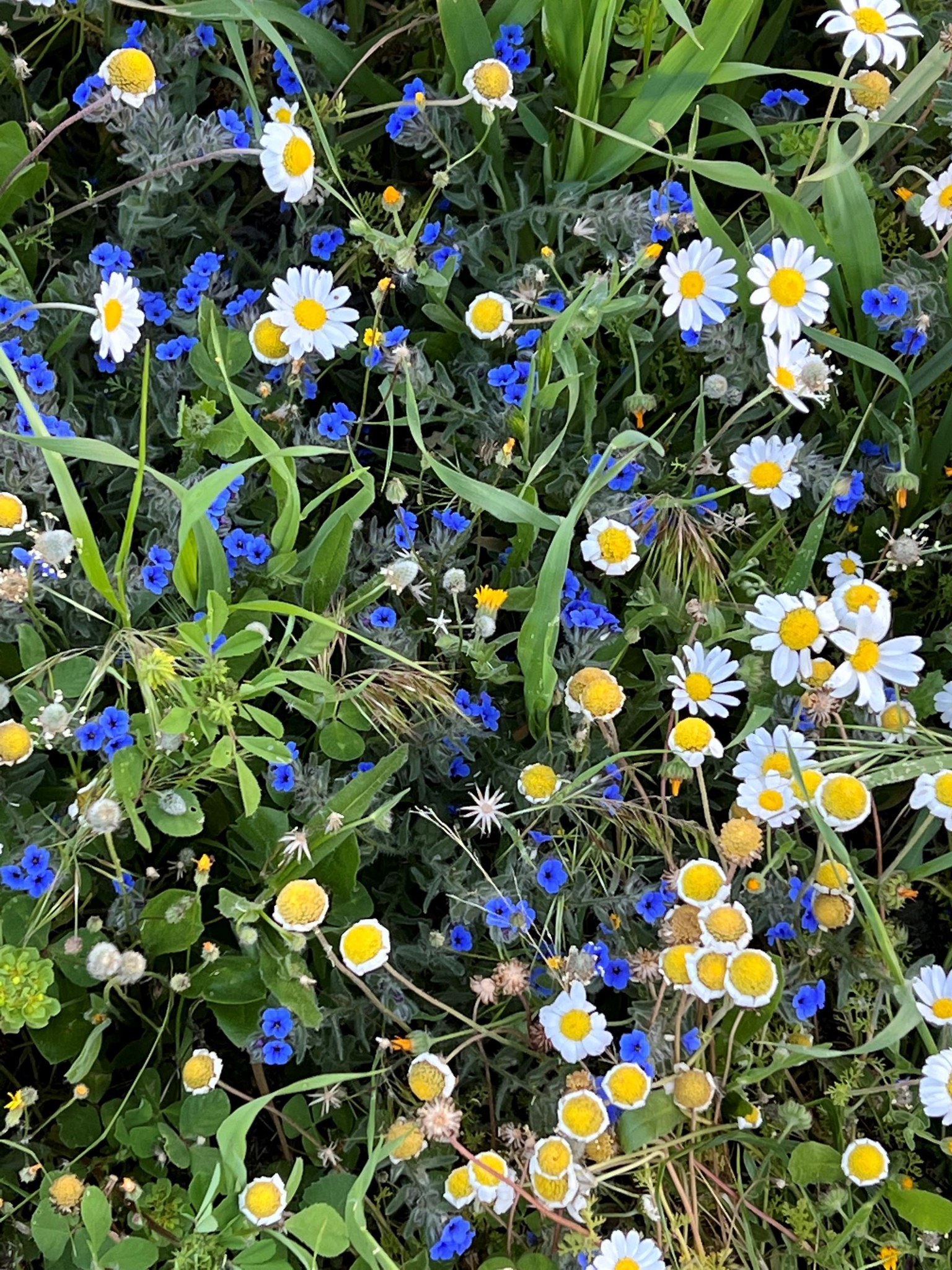
ChamomileChamomile among blue and yellow wildflowers 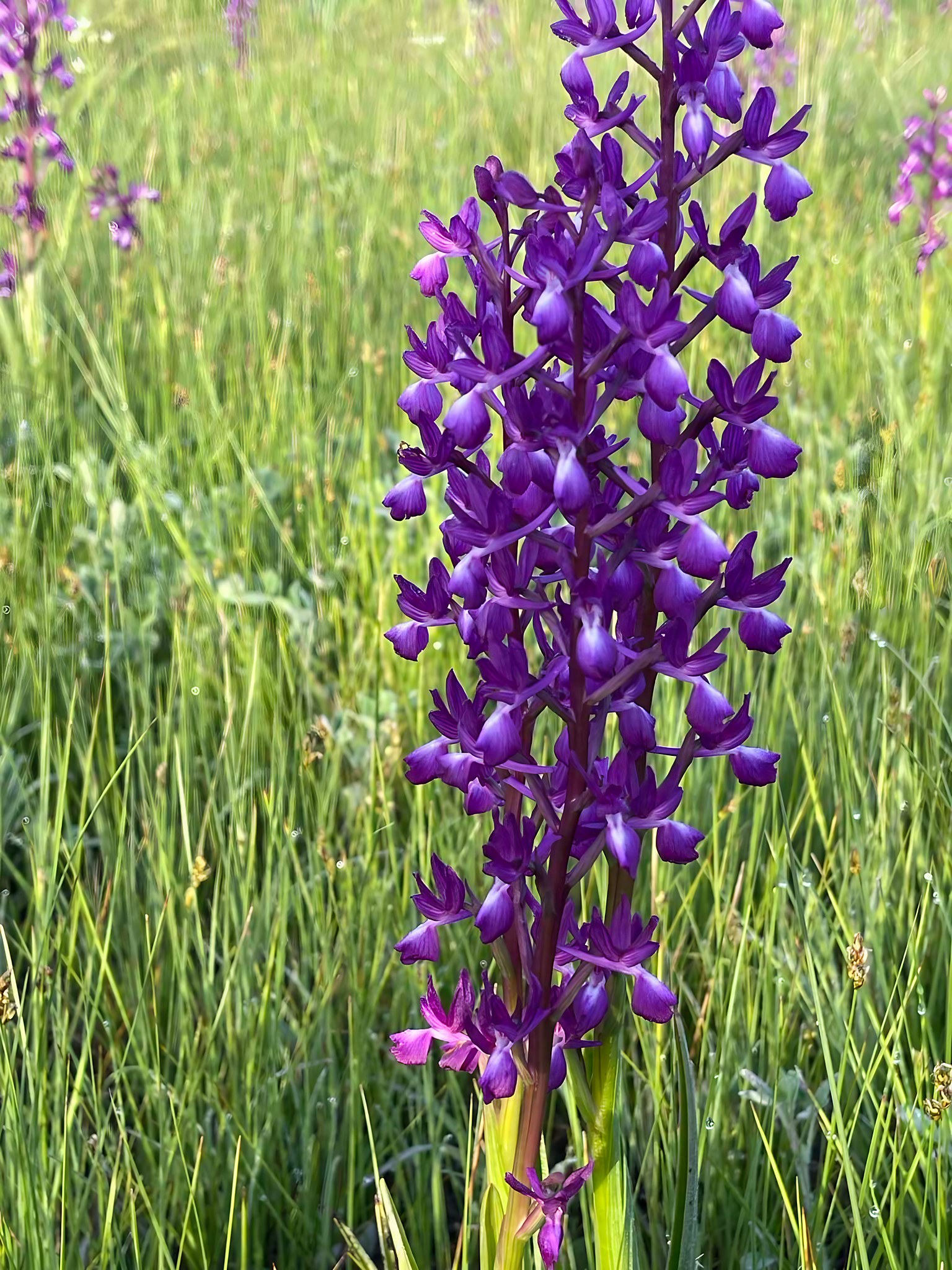
OrchidsA purple wild orchid in the grass 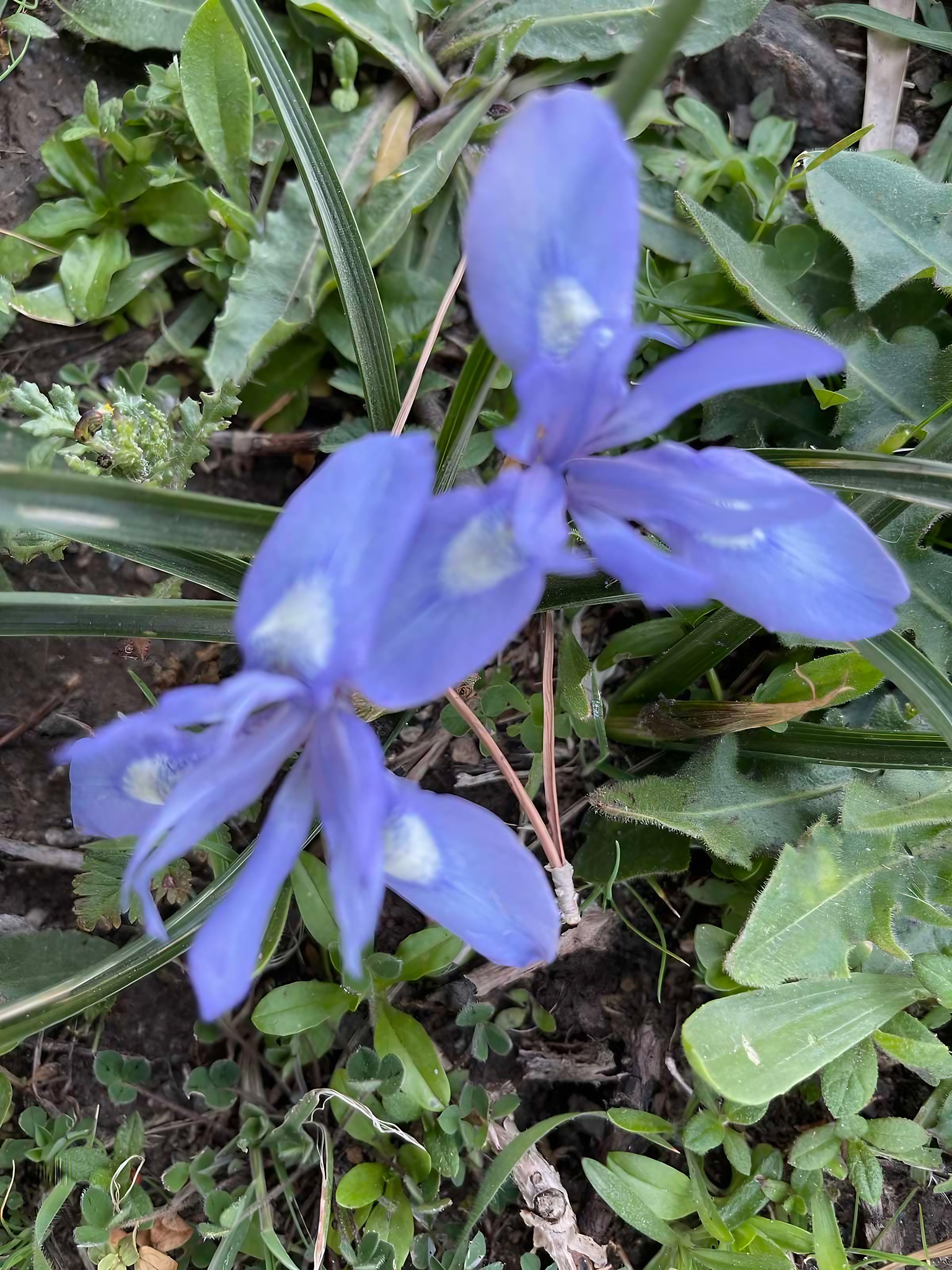
Wild irisesA pale blue wild iris among the leaves 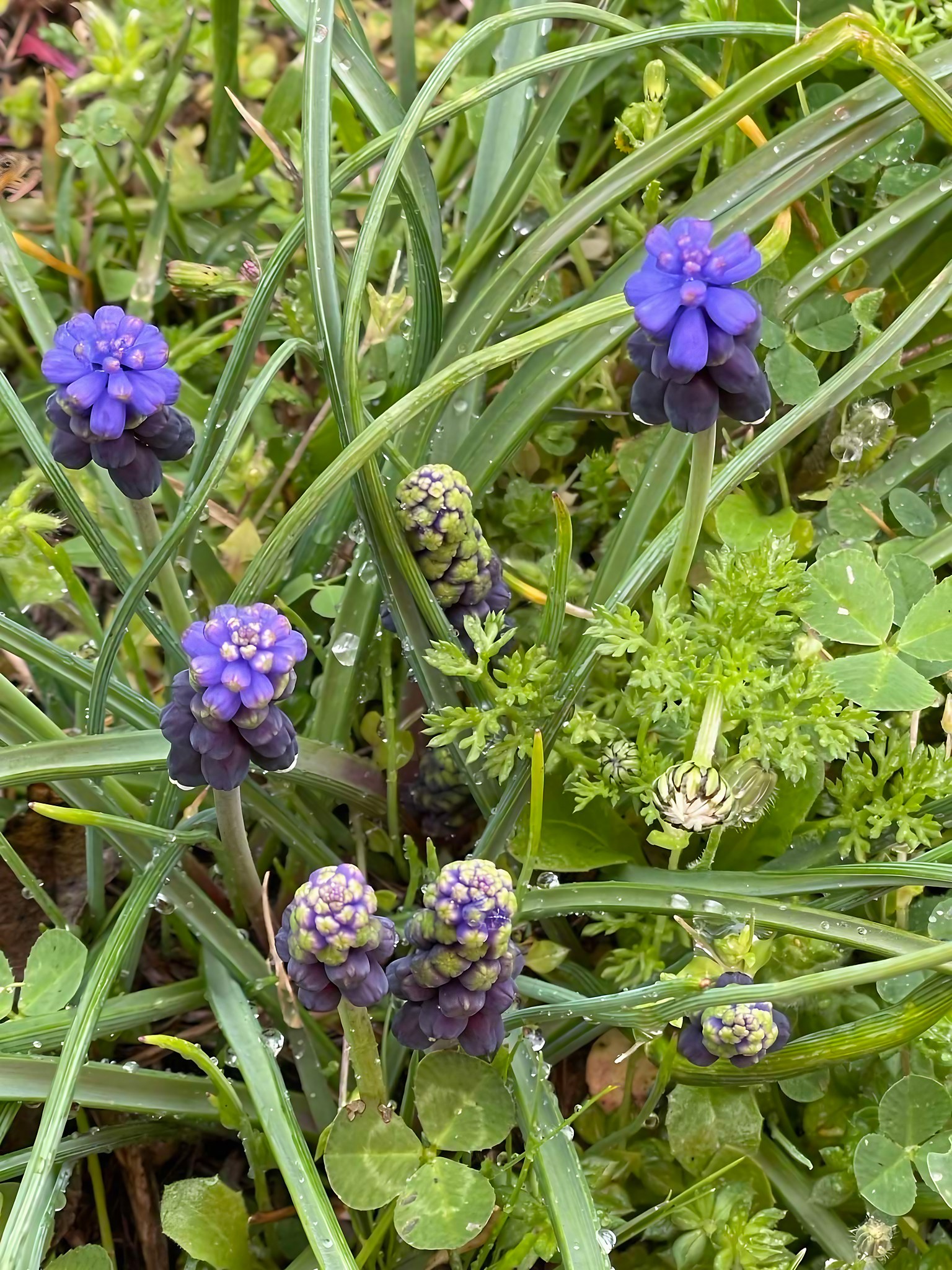
Grape hyacinthsGrape hyacinths in flower among clover 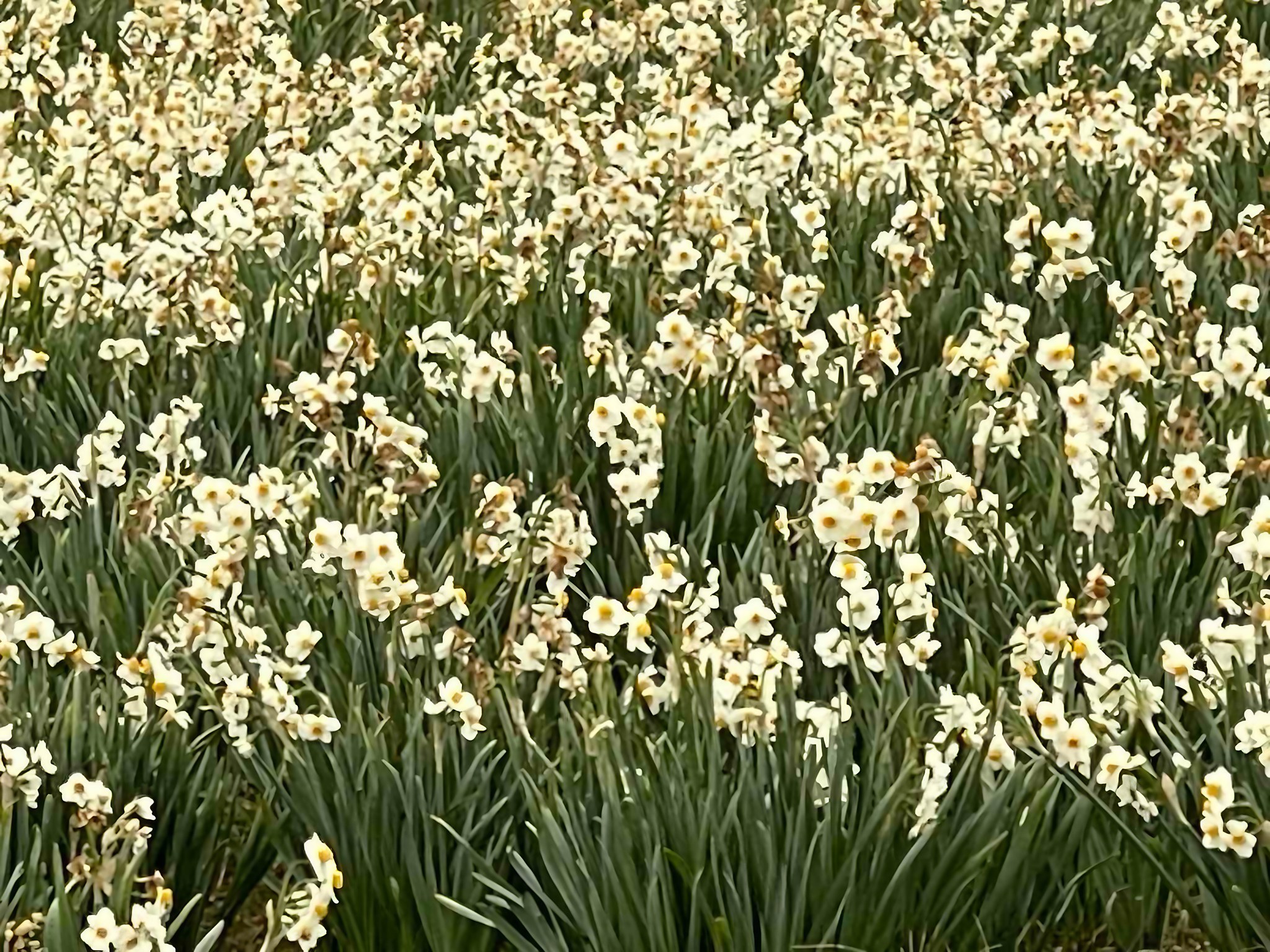
NarcissiA field of wild narcissi in flower
05
Nature began to reward us
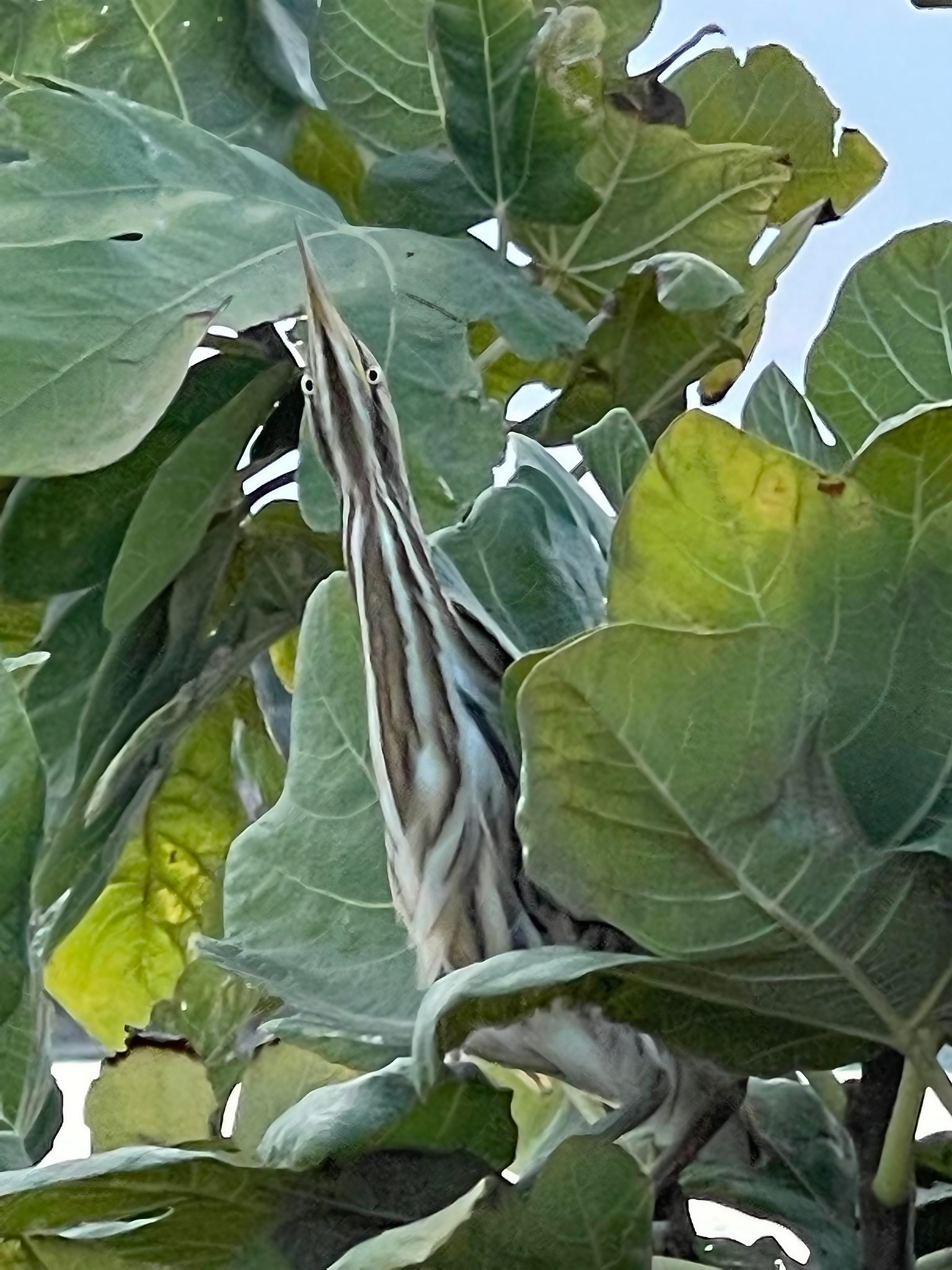
With the plants, because one does not come without the other, the animals came back: hares, weasels, martens, foxes, tortoises, hedgehogs and more.
Where there was once silence, you can now hear the sounds of life.


Today
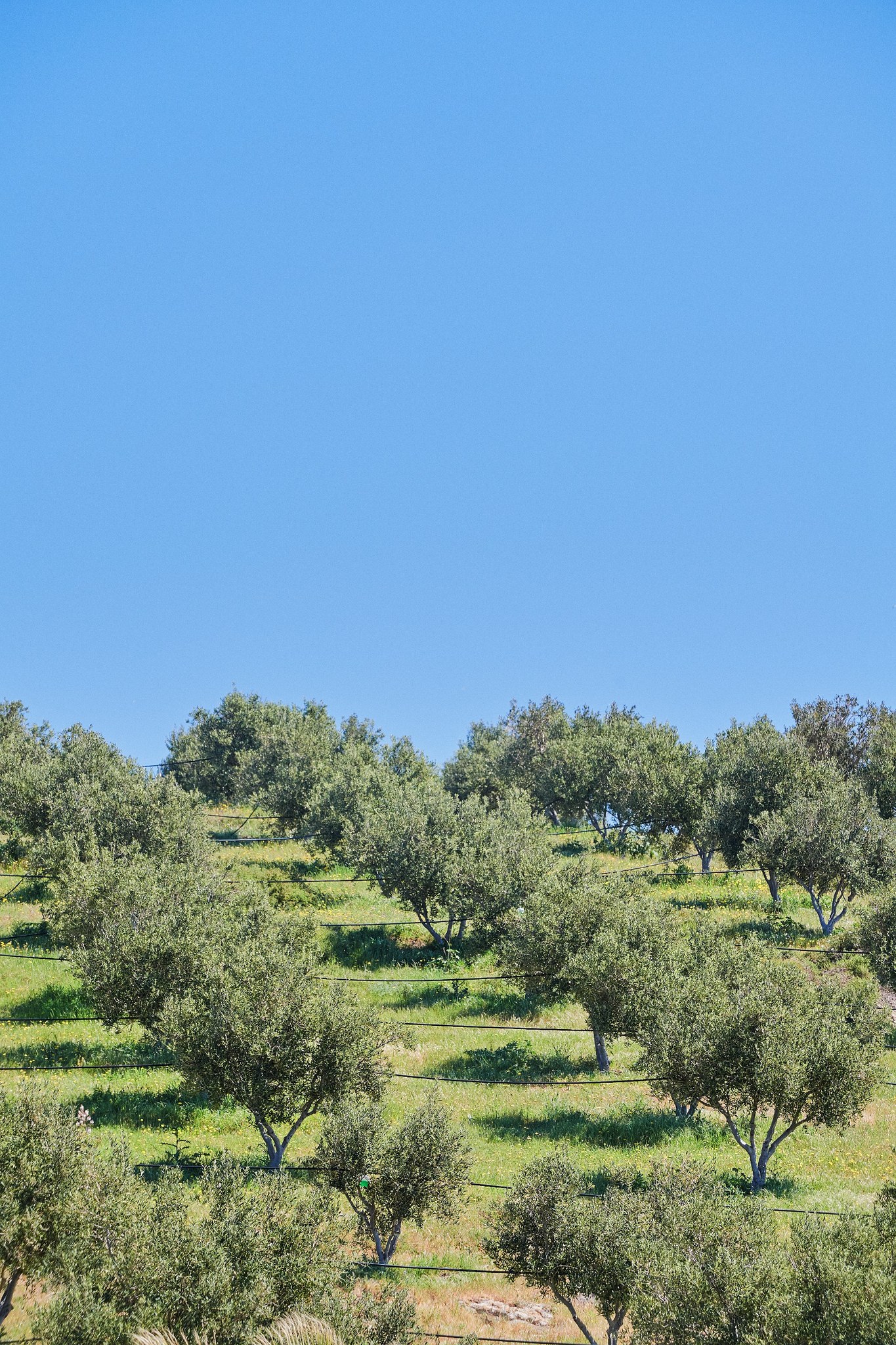
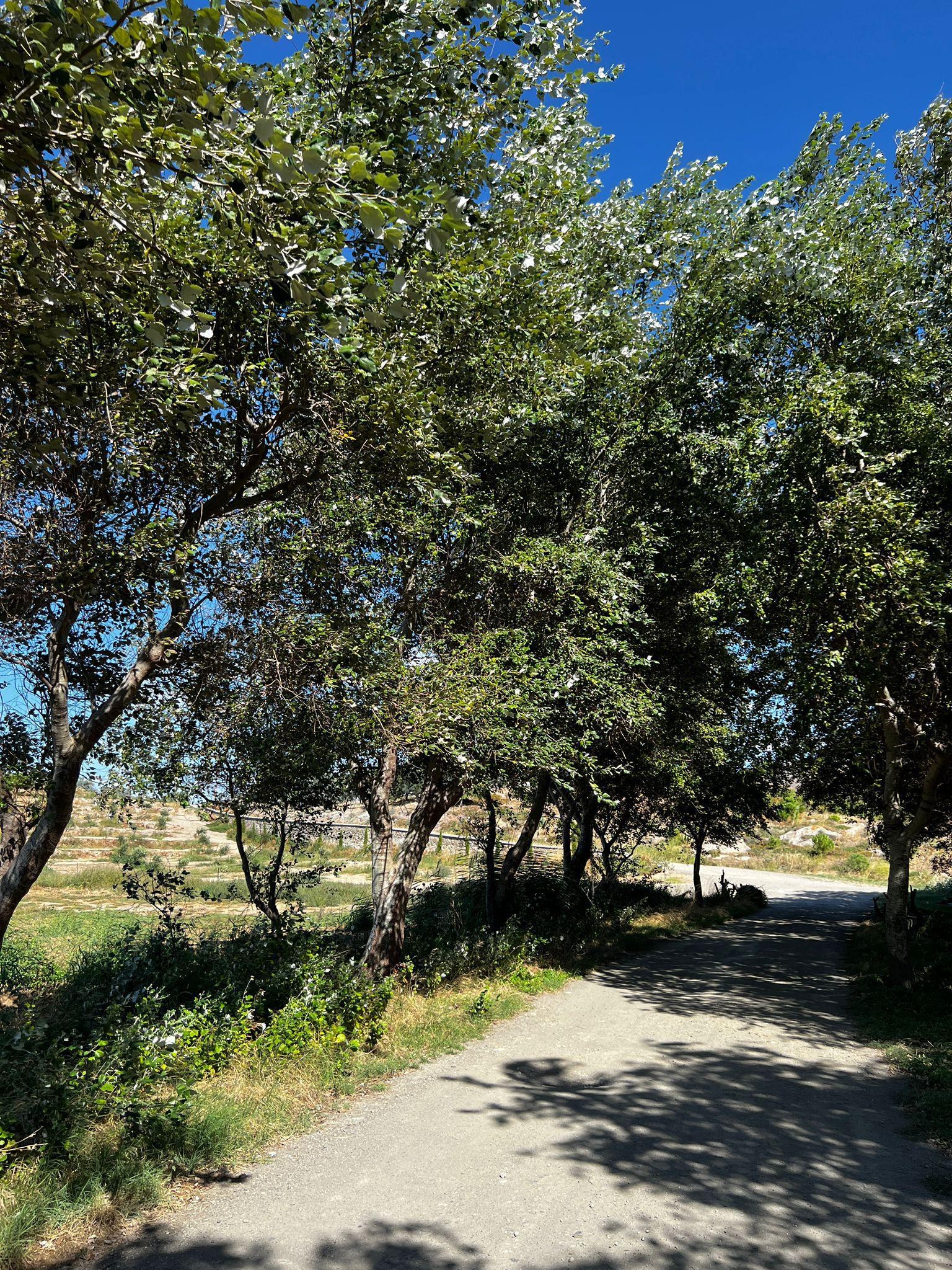
Today our olive groves look like this: the ground fully covered, healthy trees and living soil.